Keep the normal desktop
Windows, files, browsers, terminals, a dock and system settings stay the everyday starting point.
KINGAI OS keeps the desktop you already know, then brings AI assistance, memory you can inspect and actions you can approve into the same system. Spend less time copying context between apps and chats, and keep more of the work connected.
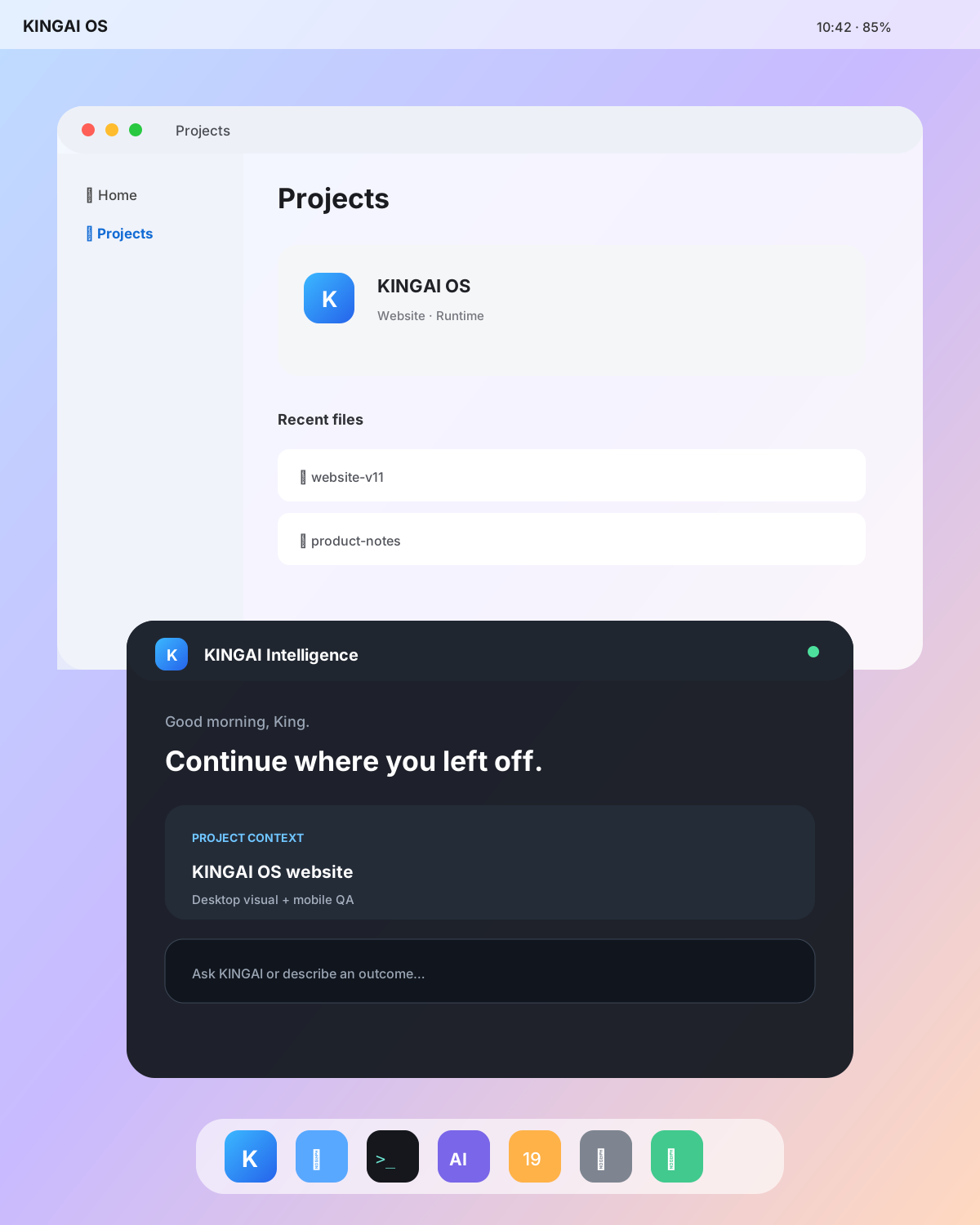
Most AI tools begin after you open a chat and explain the job again. KINGAI OS explores a different model: files, apps, projects, memory and approved actions can share one controlled system context while the familiar desktop remains the place you work.
Windows, files, browsers, terminals, a dock and system settings stay the everyday starting point.
KINGAI Intelligence can use approved system context instead of beginning every request from an empty conversation.
Review memory, limit its scope, remove it and decide when it can be used.
Higher-impact actions can require permission checks and explicit approval instead of blanket system access.
The operating system can become the consistent context around files, projects and supported tasks.
System intelligence can help organize the next step while approval remains visible for higher-impact changes.
Identity, capabilities, policy, approvals and audit keep system action bounded and revocable.
The system assistant is designed to understand a goal, use approved context, prepare work and ask before higher-impact changes. Current runtime foundations separate tasks, policy, approval, memory and audit while broader autonomous execution remains under development.

Open tomorrow’s meeting notes, turn decisions into tasks and prepare a checklist.
Memory is designed to be inspectable, removable and scoped. Higher-impact operations can be gated by capability checks and one-time approval instead of silently giving an assistant unlimited system access.
The project has active development foundations, but the broader consumer Desktop experience is not presented as a finished mass-market operating system.
For developers, creators, workstations and local-model workflows as the platform matures.
Developer-preview artifacts and active implementation foundations exist today, while the full consumer Desktop and several integrated AI experiences remain in active development. Check Download and Status for the exact current state.
No. It is an Early Access interface preview that communicates product direction and must not be treated as a verified production capture.
No. The architecture is built around identity, capabilities, policy, approvals and audit so higher-impact actions can be constrained and revoked.
The system is designed so supported intelligence can use local components and local data paths where available rather than forcing every workflow through one cloud model or vendor.
Join the early-access list for Desktop testing invitations and major release updates, or review verified status before deciding.